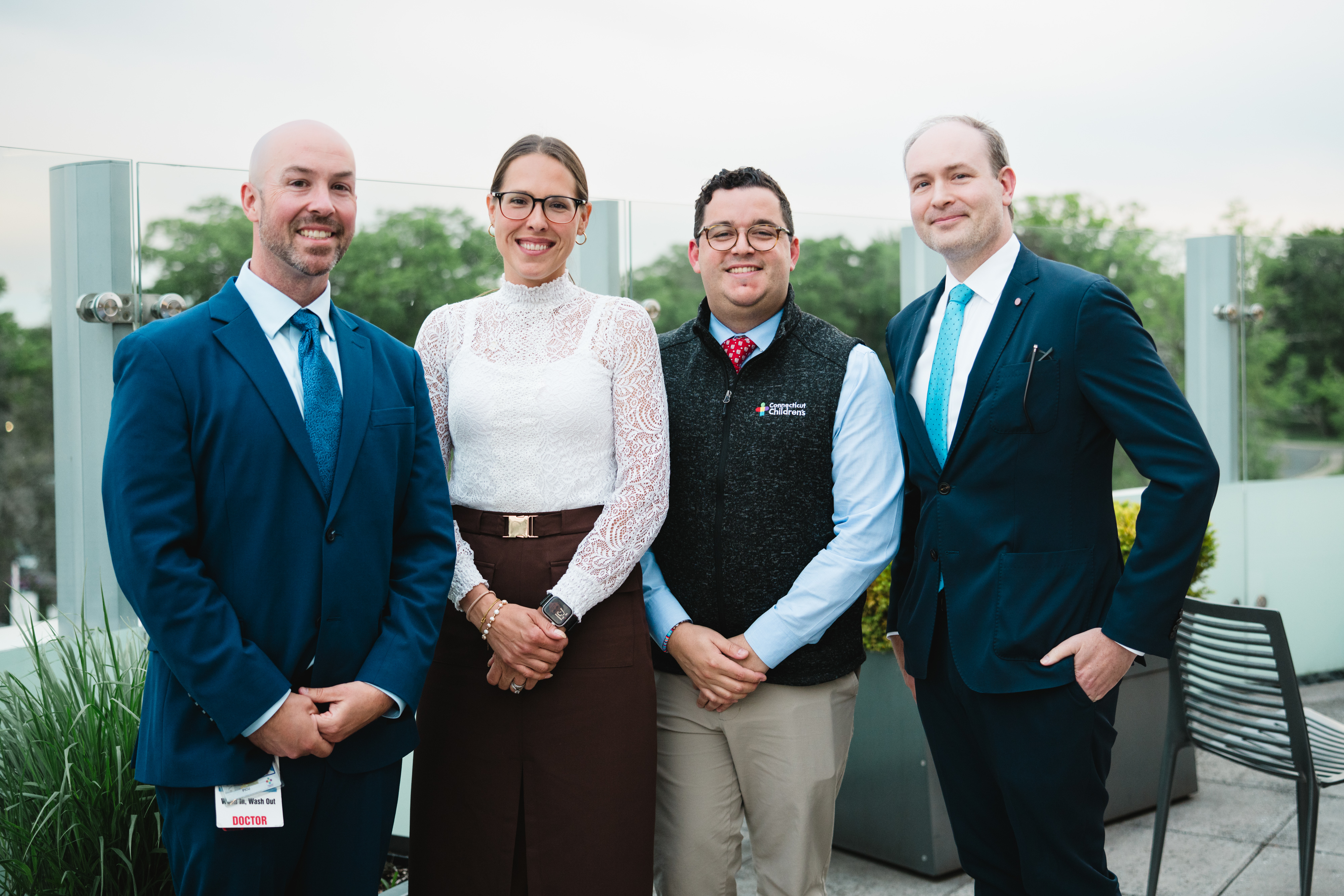
This year’s finalists were:
Pediatric surgeon James Healy, MD, MHS, FACS: Building Healthier Futures for Teens: Finding the Safest and Most Effective Obesity Treatments
Dr. Healy’s project investigates which obesity treatment pathway offers adolescents with severe obesity the most significant and durable outcomes. This project will be the first comprehensive, longitudinal comparative study examining three cohorts of adolescents with severe obesity: those treated with GLP-1 medications alone, those undergoing bariatric surgery, and those receiving both therapies.
Research associate Joanne Walker, MS: Reducing Anesthesia and Improving Healing: A Novel Device for Pediatric Esophageal Strictures
Joanne Walker’s project aims to advance a novel multifunctional esophageal device designed to reduce the need for repeated anesthesia-based procedures while improving recovery. By supporting safer, more streamlined treatment, this study has the potential to reduce anesthesia exposure, simplify care, and improve quality of life for children with esophageal strictures and their families.
Pediatric gastroenterologist Jonathan A. Salazar, MD: Using Gut-on-a-Chip to Investigate Colonic Epithelium-Microbiome Interactions as the Trigger for Ulcerative Colitis in Children
Dr. Salazar’s project seeks to better understand the abnormalities in the interaction between the gut microbiome and the colon epithelium that lead to chronic inflammation and ulcerative colitis. The goal is to identify early drivers of inflammation, uncover new therapeutic targets, and lay the foundation for more personalized treatments for pediatric inflammatory bowel disease. Learn more.
Critical care physician Robert Parker, DO: Restoring Their Voice: Evaluating the Clarity Communicator in Children with Breathing Support
Dr. Parker’s project will evaluate a communication device that helps children speak more clearly while receiving noninvasive breathing support. By restoring a child’s ability to communicate fear, discomfort, or basic needs, this research hopes to reduce distress, lessen the need for sedation, improve tolerance of respiratory support, and enhance family-centered care.
 Chrome
 Safari
 Firefox