Whoops!

This website no longer supports this web browser. Use one of these browsers to get the best possible experience.

PSA to Our Valued Supporters

Scam callers claiming to represent Connecticut Children’s are requesting donations. Please note: we do not make unsolicited fundraising calls. If you receive a suspicious call, contact us at 860-837-5700.

Marilyn Sanders is the medical director of the Neonatal Critical Care Transport Program. This program uses a highly specialized ambulance team to bring sick newborns to Connecticut Children’s’ Level 4 or Level 3 Neonatal Intensive Care Units (NICUs) from other hospitals in the state that may not have the facilities or specialized clinicians a given child may need. We sat down with Dr. Sanders to learn more about the program and her involvement in it.
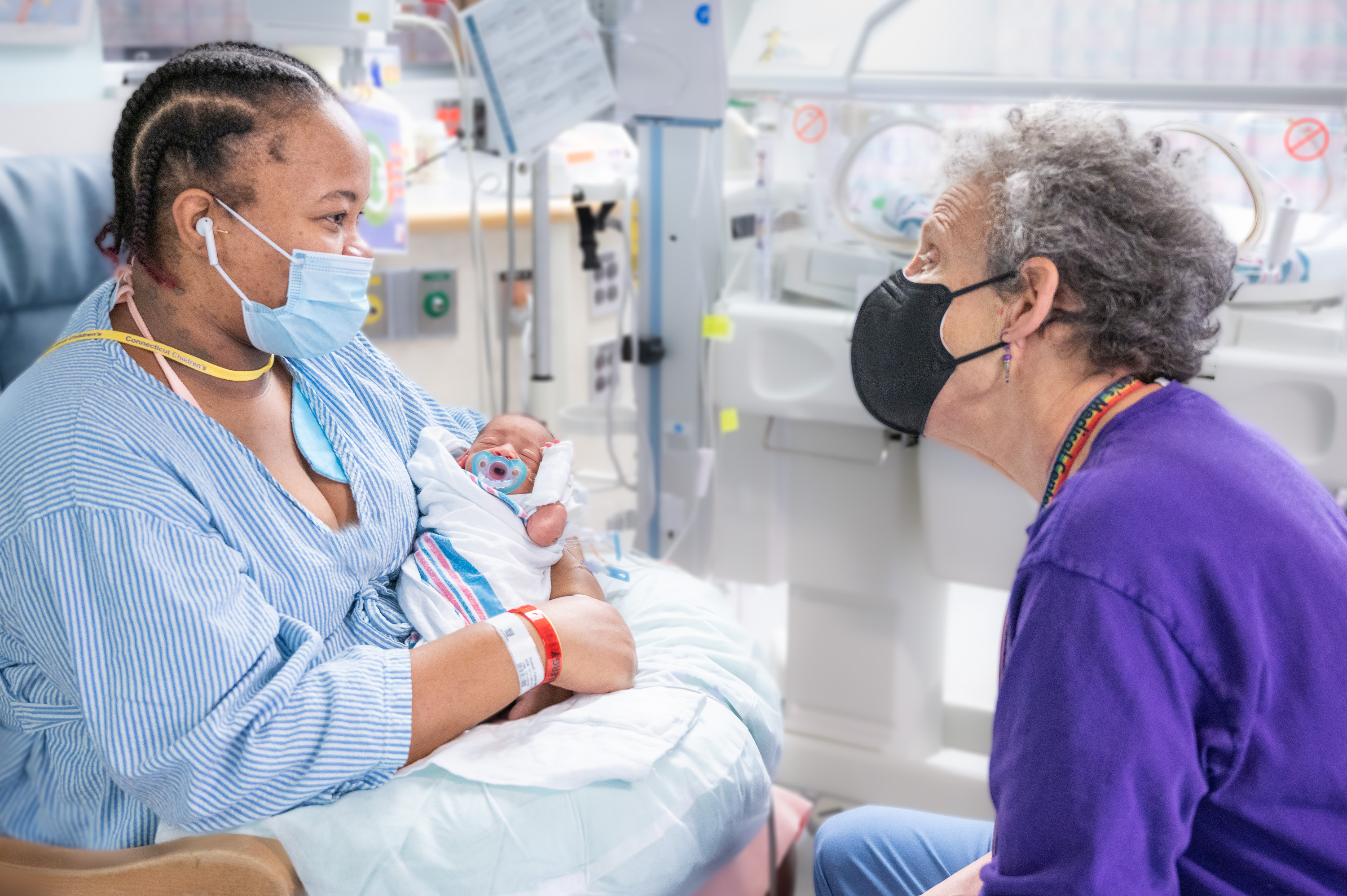
Dr. Sanders speaking with a mother who is holding her infant while in the NICU.

How many people are typically in a transport team?

There would be a team leader, either an advanced practice person—an advanced practice nurse or physician assistant—or a physician. And there’s always a nurse. For most of the neonatal transports, there’s also a respiratory therapist. Because the vast majority of the babies we pick up have some degree of respiratory compromise.

What kind of specialized equipment do you have?

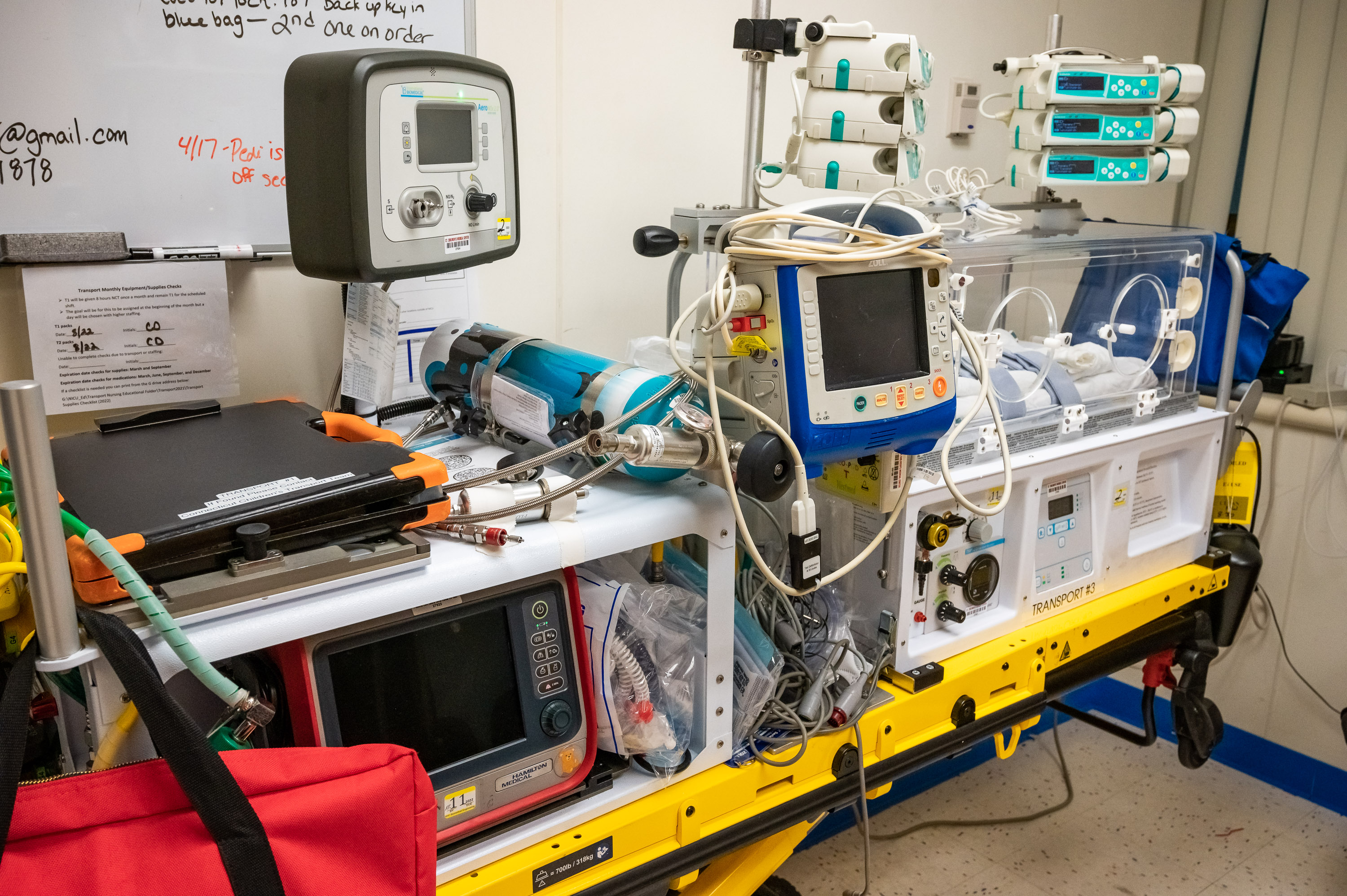
We have a transport isolette. It’s a very sophisticated incubator, that has monitors and special ventilators that can carry nitric oxide, which is a medication used for some of our sickest babies to help their oxygenation. It has tools for delivering IV medications, maintaining heat and many other things. It’s a scaled down, mobile version of the NICU.

Neonatal Critical Care Transport Equipment

Did you always want to be a doctor?

I wanted to be a doctor when I was very young. I read about Albert Schweitzer, and I was absolutely fascinated and wanted to be a doctor for some time. And then I got a little bit off track because I also love the arts and the humanities. And so when I started college, I actually thought that I would get a PhD in English literature and teach college. Then, through a whole kind of series of circumstances, I realized that was not where my passion truly lies. So I recreated myself, got a science degree, applied to medical school, and as we say, the rest is history.

Is there more to your work in the NICU and transport than simply relying on advanced equipment?

If you focus only on the technology, then you miss the story or the narrative that goes along with it. Often, in the story or the narrative, you get information that can potentially alter the outcome. If all you are interested in is ‘When did the headache start and what is the pain like,’ then you may very well miss parts of the narrative that are going to help you understand what this is really about and that it's not likely to be a brain tumor. So I try to remain open to hearing the narrative.

Latest Articles

 Alyssa Piccoli, student Executive Director stands on stage

How HuskyTHON Student Leaders Are Changing Lives

Learn More
The telemetry unit transmits information about a patient’s heart to a display monitor in another room that is watched around the clock by a trained telemetry technician.

Matters of the Heart: Cardiac Telemetry Saves Kids’ Lives

Learn More
Carter in a red suit

A Rare Muscular Dystrophy Doesn’t Slow Down Carter

Learn More
All Articles