Chrome
 Safari
 Firefox
Share


At Connecticut Children’s, anesthesiology is about more than “putting patients to sleep.” Pediatric anesthesiologists are with children every step of the way before, during, and after surgery. From the tiniest preemies to young adults, they ease fears, ensure comfort and safety, and carefully monitor each heartbeat and breath during a procedure.
Because Connecticut Children’s is a Level I Trauma Center, a pediatric anesthesiologist is on site 24/7, even when no surgeries are scheduled. From complex heart cases and emergency intubations to a squirming toddler needing sedation for an MRI, this highly specialized team is always ready.
Come spend a busy morning with the pediatric anesthesiology team in Hartford.
7:26 am
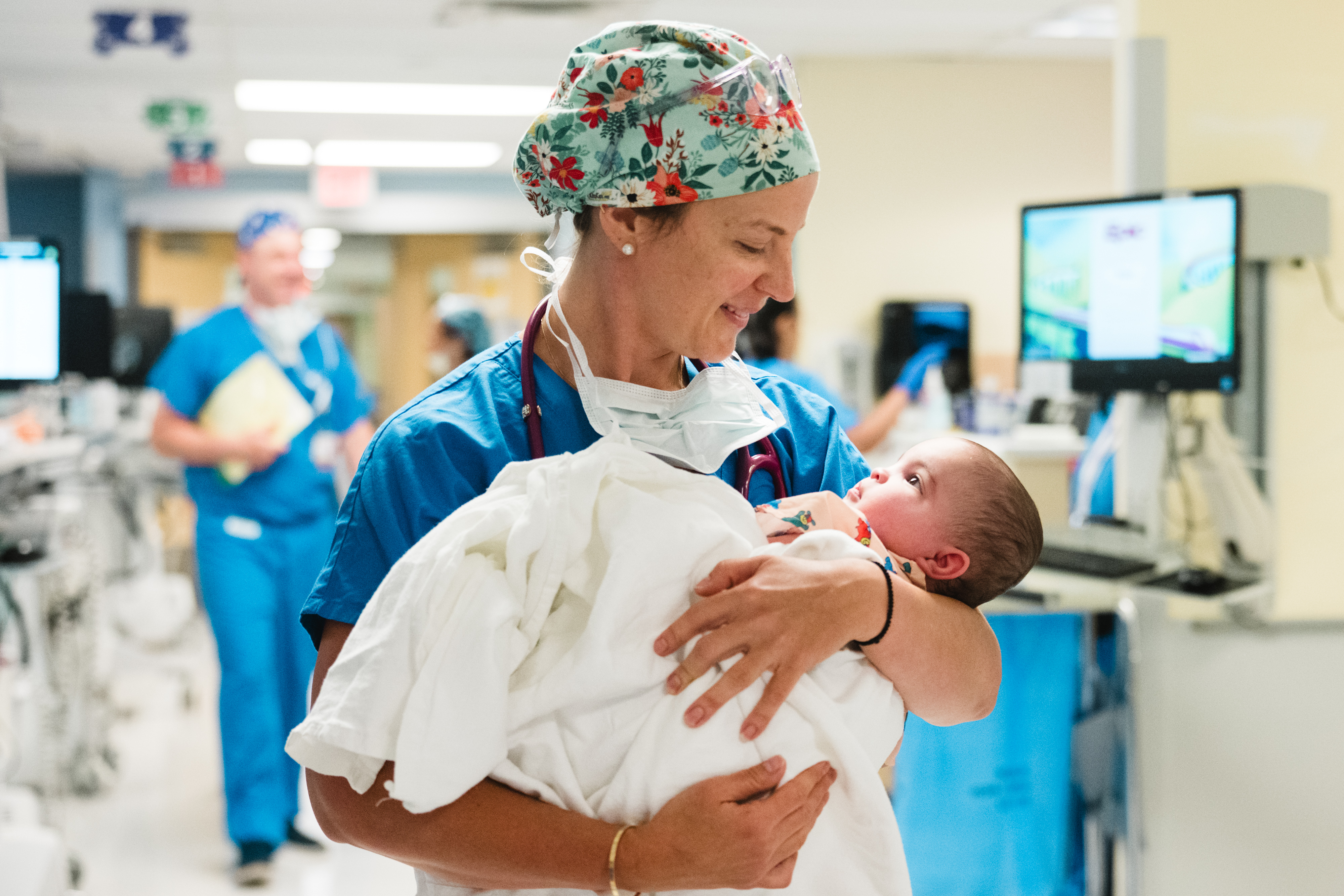
The day starts bright and early with a 7-month-old boy and his parents in the pre-operative area. The boy is here for a cleft lip repair with plastic surgeon Christopher Hughes, MD, Division Head, Plastic Surgery & Craniofacial Team. Dr. Ted Cortland, a board-certified pediatric anesthesiologist, and Laura Pelullo, a certified registered nurse anesthetist (CRNA), review his chart and discuss the plan for anesthesia with his parents. He’ll be receiving general anesthesia today.
7:36 am
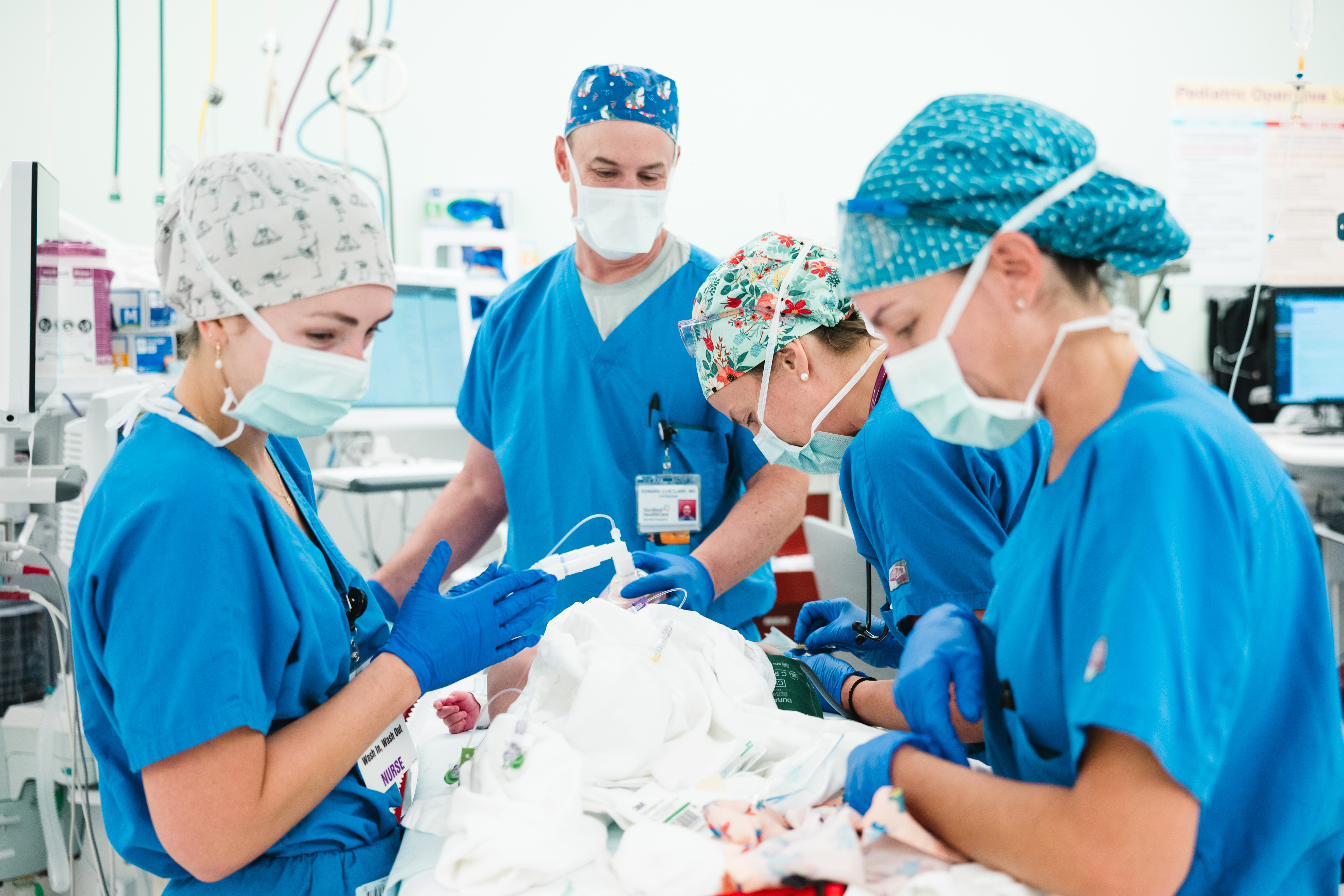
Laura carries the baby into Operating Room 2, where the surgical team is waiting. For infants and young children, anesthesia often begins with a mask, rather than an IV, which can be frightening to a child too young to understand what’s happening. Today, Dr. Cortland uses sevoflurane, an inhaled anesthetic (a modern-day form of ether) that safely and gently puts the baby to sleep. Only after he is sleeping does the team insert a tiny IV, with the help of a device called a vein finder—helpful when baby fat or past surgeries make appropriate veins hard to locate.
Once the IV is in place, a dose of muscle relaxant is added to open up the patient’s vocal cords, so a specialized breathing tube can be inserted to protect the baby’s airway. Because the surgery involves the lip, an anesthesia mask would impede the procedure. Laura uses a laryngoscope, a special metal instrument with a fiber optic light, to visualize the patient’s larynx and vocal cords to help place the breathing tube.
Monitors display the patient’s heart rate, oxygen level, and blood pressure in real time, allowing Dr. Cortland and Laura to keep a close eye on the baby’s vitals. A sudden jump in heart rate could mean he’s feeling some pain or stimulation. “The anesthesiologist is like the ICU doctor in the OR,” says Dr. Cortland.
8:07 am
Down the hall in Operating Room 7, a teenaged boy is undergoing a laparoscopic varicocelectomy to repair enlarged veins in the scrotum. Pediatric urologist Daniel Herz, MD, will use Connecticut Children’s da Vinci surgical robot, which allows for smaller incisions, enhanced precision and dexterity, and faster recovery. This patient’s anesthesiology team includes Marc Locke, DO, an anesthesiology resident, and Candice Kent, a medical student—both learning under Dr. Cortland’s supervision. As a teaching hospital, Connecticut Children’s plays an integral role in training the next generation of physicians.
Sevoflurane is used with this patient, too. Unlike many medications, sevoflurane dosing is not based on a patient’s weight, but is administered as a percentage of air breathed. MAC—minimum alveolar concentration—is the concentration of an inhaled anesthetic needed to keep a patient asleep. This patient is receiving 2% to 3%. Three monitors display his vital signs, medications, and electronic medical record. His vital signs are automatically recorded in his medical record, and the anesthesiology team inputs everything they do, as well.
8:30 am
Dr. Cortland returns to Operating Room 2, where the baby’s cleft lip repair is still underway. His vitals are steady, but his temperature has dropped—a common risk in infants whose bodies lose heat quickly. Dr. Cortland and Laura place a warming blanket called a “bear-hugger” over him to bring his temperature back up. Because abnormal body temperature can affect metabolism, blood clotting, and infection risk, maintaining a patient’s temperature is critical during surgery, and it’s the anesthesiologists who keep an eye on that. Within about 10 minutes, the baby’s temperature is back to a normal 37 degrees Celsius.
9:31 am
Back in Operating Room 7, the teenaged boy’s surgery is nearly finished, and Dr. Locke and Candice begin the critical process of preparing him to wake. “This is the art of anesthesiology, managing waking,” Dr. Locke explains. “You want the patient to come out in stages and not wake up too soon.” If it’s done too quickly, a patient may wake agitated, nauseous, vomiting, or in pain. “Everything has to happen at the right time,” he adds.
Dr. Locke and Candice retrieve the medications they’ll need from a nearby chest. A medicine called sugammadex is added to the IV, which reverses the paralytic the patient was given earlier to relax his muscles for surgery. Anti-nausea medication and two types of pain relief will help keep him comfortable when he wakes. The anesthesiology team uses what’s called multimodal pain relief, meaning they combine different types of pain relief—in this case, Tylenol and ketorolac—to provide better all-around pain management.
9:43 am
Dr. Locke suctions the patient’s throat before reinserting the breathing tube. It’s important to keep the patient’s throat clear. If saliva or blood collect in the throat, it can cause the airway to constrict when the patient wakes, preventing them from breathing. “The challenge in anesthesiology is to be prepared for everything, to anticipate what could happen,” he says. He increases the patient’s CO2 (carbon dioxide) levels to tell the body that it’s time to breathe again.
9:52 am
Back in Operating Room 2, the baby who underwent a cleft lip repair is being readied to wake up. Laura and Dr. Cortland add a narcotic to manage pain, then reverse the muscle relaxant so the baby can breathe on his own again. They continue to monitor his vitals and CO2 levels. The warming blanket is removed and his face gently wiped off. Laura carefully removes the breathing tube, then Dr. Cortland suctions his mouth and throat. As the transport crib is brought into the room, he’s given some additional oxygen via the mask.
The baby is moved from the operating table to the transport crib. He begins to fuss and cry a little, a normal reaction to the waking process, so Laura soothes him by patting his tummy.
10:16 am
The transport crib is wheeled into the post-operative area, where the PACU (post anesthesia care unit) nurses are waiting. The baby is hooked up to monitoring again, and Dr. Cortland and Laura make sure he’s settled and still breathing properly. A nurse puts a new pair of hospital socks on his tiny feet to keep him warm. He’s still a little fussy, so Laura gives him some additional pain relief. It’s best if he spends the day sleeping off the effects of surgery. Dr. Cortland and Laura then discuss the baby’s case with the PACU nurses, update his electronic medical record, and officially transfer his care from the OR to PACU. Now he’s ready to be reunited with his parents!
10:30 am
There’s no pause between cases, so Dr. Cortland is back in the pre-operative area to meet with the parents of a 15-month-old boy who is here for a hypospadias repair with Dr. Herz, a procedure to realign the opening of the urethra. In addition to general anesthesia, this patient will receive a caudal block—a form of local anesthesia that numbs the lower body for six to eight hours. Similar to an epidural, this long-lasting pain relief reduces the need for narcotics after surgery.
10:40 am
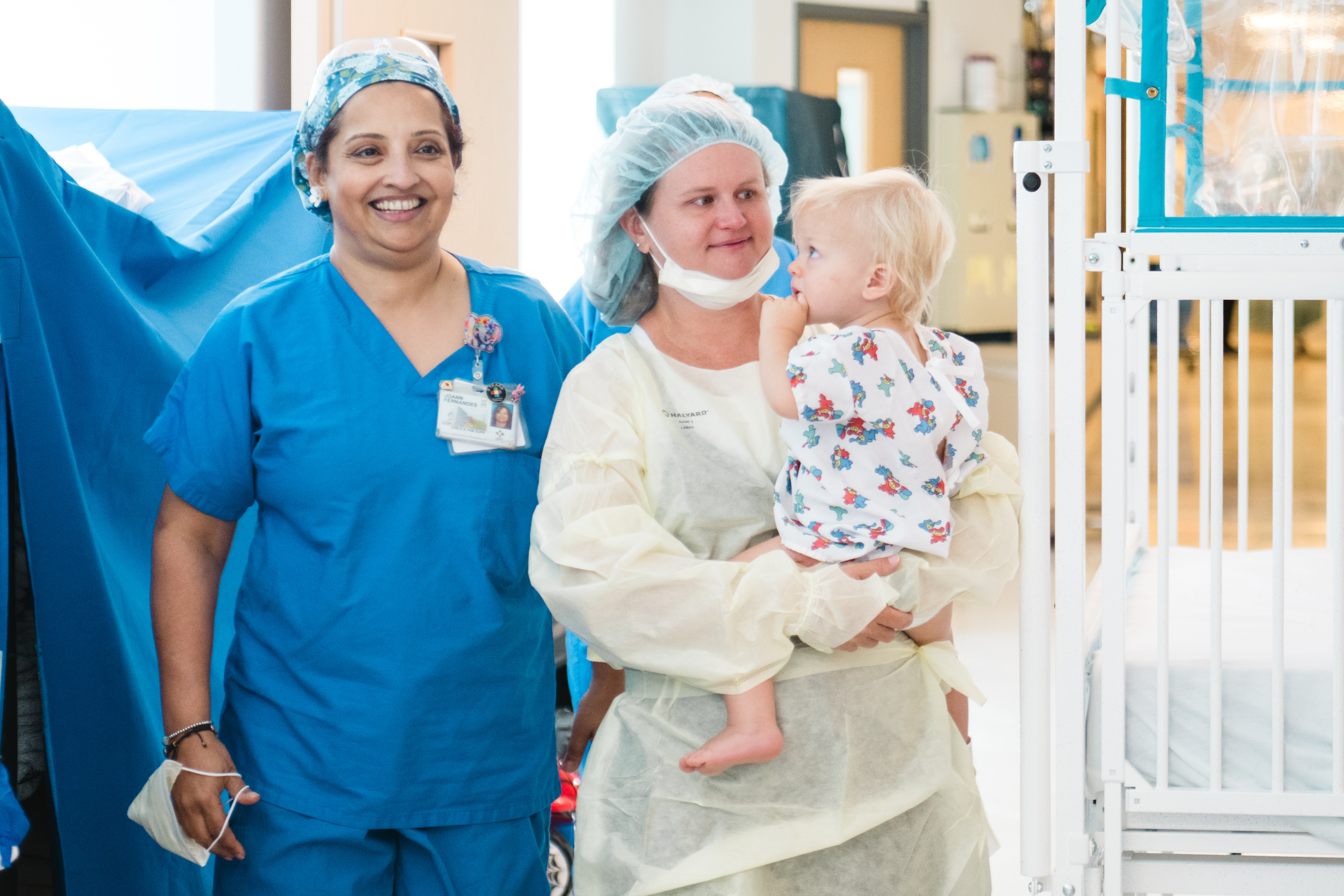
It’s go time. The boy’s mother carries him down the hallway to Operating Room 7, accompanied by Jo-Ann Fernandes, a Child Life Specialist who helps ease the transition for both patient and parent. Inside, his vitals and medical history are checked again, and his face mask put on. Mom gives him a tearful kiss before exiting the OR.
With the patient now asleep, the team jumps into action to get him ready for surgery. An IV is inserted near his ankle. A laryngeal mask airway is placed in his throat to maintain an open airway. This device is less invasive than a breathing tube, but still allows for oxygen and inhaled anesthesia to be delivered. Because today’s procedure doesn’t involve an incision in through the abdominal wall, this patient won’t need a muscle relaxant and will be able to breathe on his own throughout the surgery.
Next, the team gently rolls him onto his side, and Dr. Locke administers the caudal injection near the boy’s tailbone. An antibiotic and a dose of Tylenol are added to the IV. He’s covered with the warming blanket and is now ready for Dr. Herz.
11:11 am
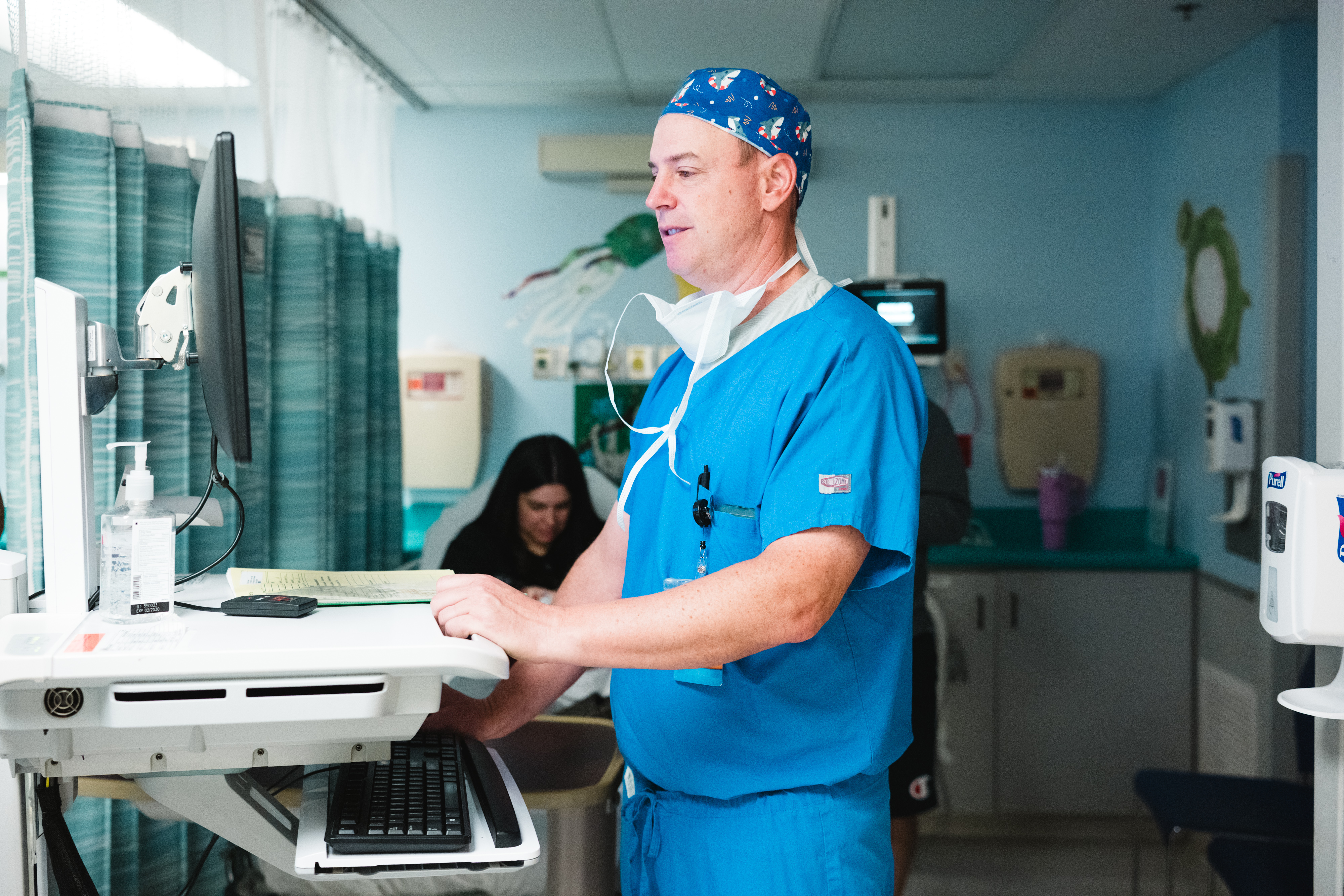
In Operating Room 7, Dr. Cortland takes over as Dr. Locke and Candice, who have been in the room all morning, leave for a short lunch break. The boy’s heart and respiratory rates are steady, indicating that he isn’t feeling anything that Dr. Herz is doing. Dr. Cortland adds some Tylenol to his IV. Even though the patient received a caudal injection, the multimodal pain control approach allows the anesthesiology team to target different pain pathways and reduce the need for narcotic pain relief (and its accompanying side effects).
11:36 am
Dr. Cortland receives a call on the operating room phone. A patient has been transferred from Hartford Hospital to Connecticut Children’s and is in need of pain medication. He pulls up her medical record on the computer and puts in the necessary order to the pharmacy.
11:40 am
Dr. Locke and Candice return from their break in time to manage the patient’s waking. Soon he’ll be headed to the post-operative area, where the PACU nurses are waiting, and then to his parents, who can breathe a sigh of relief. The surgery was a success.
By lunchtime, multiple surgeries are already complete, with more patients scheduled throughout the afternoon. In addition, urgent and emergent cases can come in through the Emergency Department and clinics at any time of the day or night. The work of anesthesiology never slows down!
At Connecticut Children’s, the Anesthesiology Division is staffed by 16 fellowship-trained pediatric anesthesiologists (including six trained in cardiac anesthesiology), eight full-time certified registered nurse anesthetists (CRNAs), six per diem CRNAs, and three cardiac CRNAs. In addition, three to five medical residents rotate through the department every month, as well as medical students and residents from other specialties, eager to learn about anesthesiology and airway management skills.
From the tiniest newborn to the tallest teenager, every child at Connecticut Children’s is cared for by experts who treat each breath and every heartbeat with the utmost care. That’s the essence of anesthesiology: watchful, compassionate, and always prepared.
Connecticut Children's pediatric experts are advancing care for kids—Thanks to people like you.
Latest Articles
Meet the Therapist: Nicholas Giampetruzzi on 17 Years of Caring for Kids at Connecticut Children’s

A Legacy of Hope: Jordan Porco Foundation $1.1 Million Gift Advances Youth Suicide Prevention